• Skip to primary navigation
  • Skip to main content
CRM Junction – SuiteCRM Specialists

CRM Junction - SuiteCRM Specialists

The Home Of SuiteCRM Cloud Computing

  • Home
  • Features
  • Support Services
  • Training
    • Understanding Workflows
    • Understanding ‘The Cloud’
  • Pricing
  • Why SuiteCRM
  • Articles
  • Contact
    • Payments

Sonet Dynamics Blog

Navigating Success: The Crucial Role of Project Management in Small Businesses

August 20, 2023 by chrisely

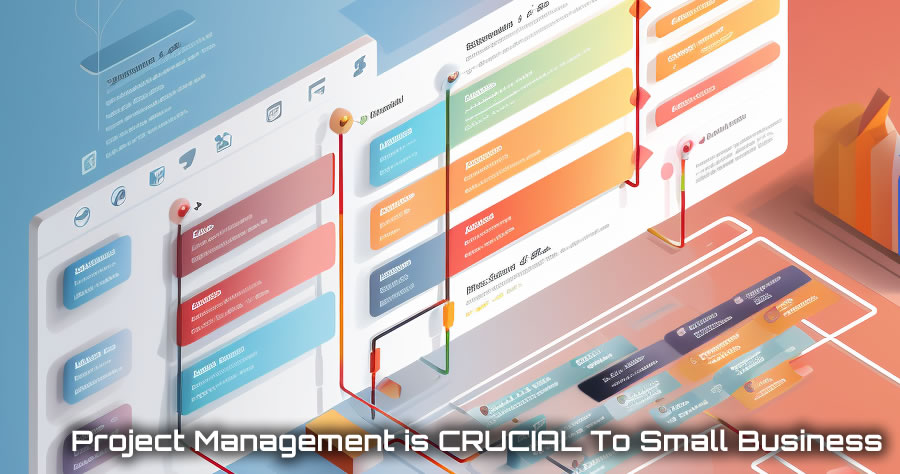
The Significance of Integrated Project Management in Small Businesses cannot be overstated as effective project management can mean the difference between success and stagnation. As organizations strive to optimize their operations and compete in a competitive market, the role of project management has become increasingly crucial. In this context, SuiteCRM emerges as a game-changer by seamlessly integrating project management into its comprehensive CRM environment. This integration offers small businesses a distinct advantage over standalone project management solutions, ultimately propelling them towards growth and efficiency.
The Rising Demand for Project Management Professionals

The Project Management Institute (PMI) predicts a staggering demand for project management professionals, estimating around 88 million positions across various industries by 2027. This projection highlights the growing recognition of the pivotal role that project management plays in achieving business goals. Notably, while entry-level project management positions will undoubtedly form a part of this demand, there’s an escalating need for senior project managers who can handle complex projects and portfolios.

Defining Senior Project Managers

Senior project managers are seasoned professionals with the expertise to manage larger, more intricate projects. Their responsibilities often extend to overseeing programs and portfolios, making them pivotal figures in organizational success. However, the exact roles and responsibilities of senior project managers can vary substantially from one company to another, reflecting the adaptable nature of this role.

Regardless of the unique demands of their positions, senior project managers universally require powerful project management software to enhance their effectiveness. This is where SuiteCRM’s integrated project management module comes into play, offering a holistic solution for businesses seeking streamlined project management within their CRM environment.

The Power of Integrated Project Management with SuiteCRM

SuiteCRM’s full project management module seamlessly merges with other CRM functionalities, creating a unified system that benefits small businesses in multiple ways:

  1. Centralized Information: Integrating project management within the CRM environment ensures that all data related to customers, projects, tasks, and interactions is interconnected. This centralization enables a comprehensive view of the customer journey, leading to better-informed decision-making.
  2. Enhanced Collaboration: Integrated project management facilitates cross-departmental collaboration. Teams can easily share information, allocate tasks, and track project progress without switching between different platforms.
  3. Real-time Insights: With SuiteCRM’s integrated project management, businesses can access real-time updates on project statuses, milestones, and task completions. This enables proactive adjustments to project plans and resource allocation.
  4. Efficient Resource Allocation: Integration with the CRM means that project managers can allocate resources based on customer insights and needs. This customer-centric approach enhances resource efficiency and project outcomes.
  5. Data-Driven Decisions: Integrated project management provides valuable data that can be used to analyze project performance, identify bottlenecks, and make data-driven improvements.

Skills and Qualifications of Senior Project Managers

To excel as a senior project manager, professionals need a combination of technical expertise and soft skills. Communication, problem-solving, and leadership abilities are paramount, as they navigate the complexities of project management. Education, typically including at least a bachelor’s degree and often certification such as PMP, is another vital component that complements experience.

In the dynamic landscape of small businesses, effective project management is non-negotiable. The integration of project management within a CRM environment, as exemplified by SuiteCRM’s comprehensive approach, presents businesses with an innovative way to streamline processes, enhance collaboration, and drive growth. As the demand for senior project managers continues to rise, organizations equipped with integrated project management solutions are poised to meet the challenges of the future head-on. By leveraging the power of integrated project management, small businesses can navigate complexities with ease, embrace data-driven strategies, and ultimately thrive in an ever-evolving market.

Filed Under: Business Operations, Sonet Dynamics Blog, SuiteCRM

Key Customer Service Trends in 2023: Cloud, CRM and AI Take Center Stage Amid Persistent Remote and Hybrid Work Models

August 19, 2023 by Scott Scholz

The shift to remote work during the COVID-19 pandemic significantly impacted contact center agent jobs, with many transitioning to a work-from-home model. While the pandemic’s intensity has diminished, a substantial number of agents are expected to continue remote work in the long term. Deloitte Digital’s recent global contact center survey reveals that 69% of organizations currently maintain work-from-home programs, and 73% of those anticipate sustaining such programs in the next two years.

This trend has sparked a transformation in the technological landscape of contact centers. A rapid shift to cloud technologies has been a prominent change to facilitate remote work, with analytics, CRM, knowledge management, interaction recording, and workforce management systems moving to the cloud by approximately 50% over the last two years, according to Deloitte’s data.

The priorities for customer service organizations now encompass artificial intelligence, analytics, self-service automation, agent enablement, and infrastructure upgrades. Gartner’s customer service and support tech trends report also highlights similar investment focuses, such as case management systems, internal collaboration tools, cloud-based systems, knowledge management systems, and customer analytics dashboards.

Analytics is expected to undergo significant deployment growth this year, with predictive analytics, digital experience analytics, customer journey analytics, sentiment analytics, and digital experience analytics being key methodologies.

Conversational intelligence is a central technological innovation in modern customer service operations. It involves extracting sentiment and details from customer interactions, analyzing these interactions on a large scale, and providing insights into customer concerns across diverse communication channels.

Gartner predicts an increasing value in virtual customer assistants and chatbots, with three-quarters of leaders indicating the high value these technologies will bring to their organizations in the next two years. Similarly, customer self-service and assisted service are deemed crucial for future success.

The integration of artificial intelligence, particularly for sentiment analysis and problem resolution, is gaining prominence. AI’s role in categorizing interactions, scoring sentiment, and facilitating customer interactions in real time is becoming indispensable.

Generative AI is another critical development, with its ability to provide automated responses across multiple digital channels. While concerns of generative AI replacing human agents exist, experts emphasize that it should complement, not replace, human agents.

he evolution of remote work has brought substantial technological changes to contact centers. Cloud technologies, CRM, analytics, conversational intelligence, AI integration, and generative AI are at the forefront of these advancements. These transformations aim to enhance customer experiences and navigate the challenges of modern customer service operations.

Filed Under: AI, Business Operations, Sonet Dynamics Blog, SuiteCRM

Leveraging SuiteCRM and WordPress To Unleash The Power of Comprehensive Digital Marketing

August 18, 2023 by chrisely

In an era where the digital landscape is perpetually evolving, the art of marketing has undergone a revolutionary shift. Conventional marketing techniques have given way to an array of digital strategies that can seamlessly connect businesses with a global audience at the click of a button. The advent of the internet and the rise of social media have ushered in an era of opportunity, demanding the creation and execution of astute real-world marketing strategies.

Navigating the Transformative Journey: Traditional to Digital

Before the era of digitalization, marketing predominantly relied on traditional channels like television, radio, print media, and direct mail. However, the advent of the internet has upended this paradigm. Today, businesses have at their disposal an arsenal of digital marketing channels, each offering distinct avenues for engaging their target demographic.

A Symphony of Digital Marketing Channels:

  1. Search Engine Optimization (SEO): At the core of digital visibility lies SEO, a strategic approach to enhancing website ranking in search engine results. A robust SEO strategy propels organic and targeted traffic.
  2. Paid and Organic Social Media: Social media platforms have metamorphosed into potent marketing tools, allowing businesses to engage with their audience directly. Organic content nurtures brand loyalty, while paid social media advertising hones in on specific demographics with surgical precision.
  3. Marketing Analytics: The bedrock of digital marketing lies in data-driven decisions. Analytics tools illuminate user behavior, providing invaluable insights to refine strategies and yield superior outcomes.
  4. Audience Cultivation: Nurturing a dedicated online following is indispensable. Businesses can cultivate this audience with insightful content, fostering loyalty and recurring business.
  5. Display and Pay-Per-Click Advertising: Display ads and PPC campaigns deliver targeted ads to potential customers, maximizing ROI by reaching individuals actively interested in specific products or services.

Sculpting a Successful Digital Strategy:

Harnessing the Power of Comprehensive CRM (SuiteCRM):

Central to effective digital marketing is a comprehensive Customer Relationship Management (CRM) system. A platform like SuiteCRM seamlessly integrates customer data, streamlining communications and interactions. From personalized email campaigns to lead tracking and engagement analysis, SuiteCRM empowers businesses to forge deeper connections with their audience, fostering lasting loyalty.

Crafting a Captivating Content Strategy:

Content reigns supreme in the digital realm. Crafting engaging and valuable content positions your brand as an industry authority and maintains audience engagement. An all-encompassing content strategy encompasses blog posts, videos, infographics, podcasts, and more, catering to diverse consumer preferences.

Orchestrating Organic Social Media Triumphs:

The bedrock of digital trust lies in forging genuine connections via organic social media content. Engaging with comments, sharing user-generated content, and infusing humanity into your brand narrative can establish credibility and inspire enduring trust.

Personalized Digital Marketing for Varied Business Models:

Distinct business models necessitate customized digital strategies:

  • E-commerce: E-commerce enterprises thrive with robust SEO, user-centric WordPress websites, and precise PPC campaigns.
  • B2B: B2B companies flourish with informative content that guides potential clients through complex decision-making processes.
  • Local Businesses: Local establishments can capitalize on geolocation targeting on search engines and social media, enticing nearby consumers.

The WordPress Advantage in Crafting a Stellar Digital Presence:

A pivotal player in the digital marketing orchestra is WordPress, an ideal Content Management System (CMS) and website platform. Seamlessly integrating with SuiteCRM, WordPress offers an array of benefits:

  • Responsive Design: WordPress websites are inherently adaptable, ensuring optimal viewing experiences across devices.
  • Swift Loading Times: WordPress optimization enhances loading speed, reducing bounce rates and keeping visitors engaged.
  • Intuitive User Experience: User-centric interface design and seamless navigation encourage prolonged visits.
  • SEO Synchronization: WordPress supports effortless integration of SEO elements, propelling your site’s visibility on search engines.

Metamorphosis of Marketing: The Digital Dawn

The advent of the internet and the dynamic realm of social media have redefined the marketing landscape. Strategic digital marketing has fundamentally transformed customer interactions and global market competition. The ability to pinpoint specific demographics, real-time campaign evaluation, and agile strategy refinement offer unparalleled advantages.

Crafting successful real-world marketing strategies in today’s digital milieu requires a holistic approach. Embrace SEO, social media, data-driven insights, and compelling content to captivate your audience. Tailor strategies to your business model and continually optimize your WordPress-powered website to bolster campaigns and customer connections. The journey from traditional marketing to strategic digital marketing may appear daunting, but armed with SuiteCRM and WordPress, businesses can flourish in this new era of limitless marketing potential.

Filed Under: Marketing, Sonet Dynamics Blog, SuiteCRM, WordPress

Unlocking ‘The Cloud’: But What Is ‘The Cloud’?

August 14, 2023 by chrisely

Many people wonder about the term, ‘The Cloud’.  The terms “the cloud” and “cloud computing” have however,  become part of our daily vernacular. Yet, for many, the concepts remain elusive.

Unveiling the Cloud: A Digital Nexus

When we refer to “the cloud,” we’re delving into a vast network of servers, all accessible via the Internet. These servers collectively house software applications, databases, and an array of resources. Geographically dispersed across data centers worldwide, they constitute the foundation of cloud computing. Unlike traditional computing setups, cloud computing eliminates the need for users and organizations to manage physical servers or run applications on local devices.

Seamless Accessibility from Anywhere, Anytime

At the heart of the cloud’s allure is its ability to provide users with access to files and applications from virtually any device. The mechanism is simple yet revolutionary: Instead of relying on local hardware and storage, computation and data storage occur on servers located within data centers. This explains how you can seamlessly transition from an old phone to a new one and still find your Instagram account intact, replete with photos, videos, and conversations. This principle extends to cloud email services like Gmail and cloud storage platforms such as Dropbox.

Business Transformation via Cloud Computing

For businesses, embracing cloud computing brings forth a multitude of advantages. It liberates them from the intricacies of maintaining physical servers, as cloud service providers shoulder this responsibility. This shift is especially beneficial for smaller enterprises with limited resources for internal infrastructure. By outsourcing their infrastructure needs to the cloud, these businesses can achieve newfound affordability and scalability. Moreover, cloud computing facilitates global operations by offering universal access to shared files and applications for employees and customers alike.

Technical Marvel: Virtualization

The heart of cloud computing lies in a technical marvel known as virtualization. This innovation enables the creation of virtual machines—digital simulations that replicate physical computers, complete with their hardware attributes. What’s remarkable is that these virtual machines remain isolated from one another, even when they share a common physical host. This isolation ensures data privacy and security. By running multiple virtual machines on a single host, cloud providers optimize hardware utilization, effectively transforming data centers into hubs capable of serving countless organizations.

Reliability through Redundancy

Cloud servers are engineered with reliability at their core. Even in the face of individual server issues, cloud services persist, remaining accessible. Cloud providers achieve this through redundancy, backing up services across multiple machines and regions. This strategy ensures continuous availability, minimizing downtime and disruptions.

Cloud Services Unveiled

Cloud services encompass a wide spectrum of resources managed by cloud providers. These span infrastructure, applications, development tools, and data storage, to name a few. These services are categorized into different models, each catering to specific requirements and use cases.

WordPress and SuiteCRM: Cloud Computing Exemplars

Two prime examples of cloud computing in action are WordPress and SuiteCRM. These platforms operate through web browsers, harnessing the power of the Internet to deliver their services. WordPress, a widely-used content management system, allows users to create and manage websites effortlessly, all within a browser interface. Similarly, SuiteCRM, a robust customer relationship management solution, provides tools for sales, marketing, and customer support through a browser-based experience.

Both WordPress and SuiteCRM epitomize the cloud’s capabilities by providing accessible, browser-based solutions that harness the cloud’s agility and reach. This highlights how cloud computing transcends boundaries, enabling users to engage with versatile applications from anywhere with an Internet connection.

The cloud and cloud computing have revolutionized how we interact with technology. By harnessing remote servers and advanced virtualization techniques, the cloud empowers users and businesses to access resources seamlessly, regardless of device or location. The significance of the cloud is evident in its ability to reduce costs, foster innovation, and enhance global connectivity. As technology continues to advance, the cloud remains a driving force shaping our relationship with data and applications.

Filed Under: Business Operations, Sonet Dynamics Blog, SuiteCRM, WordPress

Revolutionize Your Marketing: Unite CRM with Dan Kennedy’s Direct Response Brilliance

August 13, 2023 by Scott Scholz

Customer Relationship Management (CRM) is a powerful tool that perfectly complements Dan Kennedy’s approach to direct response marketing, enhancing its effectiveness and impact. Kennedy’s approach is all about creating personalized, targeted, and persuasive marketing campaigns that resonate with individual customers, and CRM provides the infrastructure and insights needed to execute this strategy seamlessly.

  1. Segmentation and Targeting: Dan Kennedy emphasizes the importance of segmenting your audience and crafting tailored messages for each group. CRM systems allow you to categorize and organize your customer database based on various criteria such as demographics, buying behavior, and preferences. This segmentation enables you to send highly relevant and targeted messages, offers, and promotions to different customer groups, maximizing the chances of engagement and conversion.
  2. Data-Driven Decision Making: Kennedy’s approach emphasizes making marketing decisions based on real data and results. CRM software collects and analyzes customer interactions, purchase history, and engagement metrics. This data-driven insight helps you identify the most effective marketing channels, campaigns, and messages. You can track which campaigns generate the highest response rates, allowing you to refine your approach over time and invest resources where they have the greatest impact.
  3. Personalized Communication: Kennedy’s strategy involves crafting personalized messages that speak directly to the recipient’s needs and desires. CRM systems enable you to store detailed customer profiles, including their preferences, purchase history, and interactions with your business. Armed with this information, you can create personalized marketing materials that resonate with individual customers, increasing the likelihood of capturing their attention and driving conversions.
  4. Automated Follow-Up: Kennedy emphasizes the importance of consistent follow-up to build trust and credibility with potential customers. CRM platforms offer automation capabilities that allow you to set up personalized follow-up sequences based on customer behavior. You can send automated emails, reminders, and offers at strategic intervals, ensuring that your brand remains top-of-mind and reinforcing the direct response message.
  5. Measuring ROI and Campaign Effectiveness: Kennedy’s approach focuses on measurable results and return on investment (ROI). CRM systems provide tools to track the performance of your marketing campaigns in real-time. You can monitor key metrics such as lead conversion rates, sales, and revenue generated from each campaign. This allows you to calculate the ROI of your marketing efforts accurately and make informed decisions about resource allocation.
  6. Testing and Optimization: A crucial aspect of Kennedy’s approach is testing different marketing elements to determine what works best. CRM software enables A/B testing of email subject lines, content, and calls to action. You can experiment with different approaches, analyze the results, and refine your campaigns based on data-driven insights.

In essence, CRM serves as the backbone of Dan Kennedy’s direct response marketing approach by providing the tools needed to segment, target, personalize, automate, and measure the effectiveness of campaigns. It enables businesses to implement Kennedy’s strategies at scale, fostering meaningful customer relationships and driving revenue growth.

Filed Under: Marketing, Sonet Dynamics Blog, SuiteCRM

  • « Go to Previous Page
  • Page 1
  • Page 2
  • Page 3
  • Page 4
  • Interim pages omitted …
  • Page 12
  • Go to Next Page »

Copyright © 2026 · Sonet Dynamics llc · All Rights Reserved